
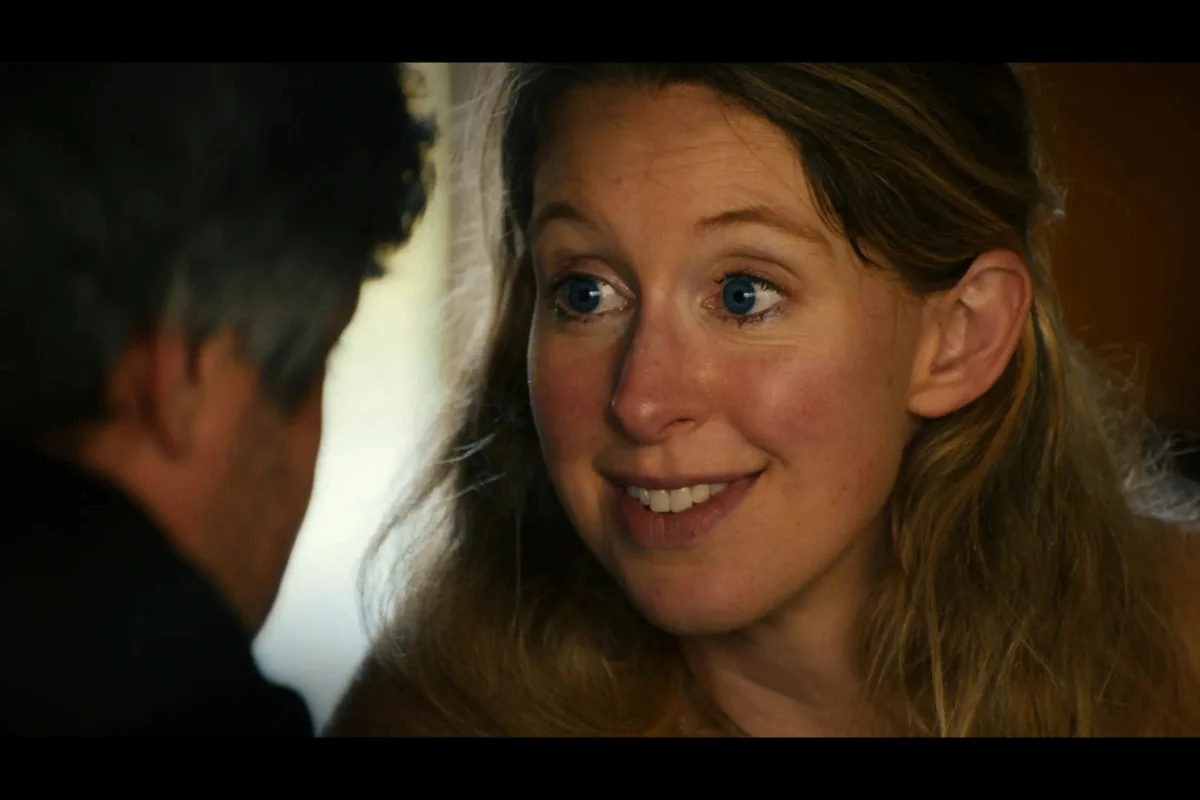
The You Can See Everything box office run has turned into the most surprising movie story of the fall. A24’s three-hour documentary about Theranos founder Elizabeth Holmes earned an estimated $19.5 million in its second weekend in North America, a jump from its opening frame, and finished just behind the new DC release Clayface. For a nonfiction film with no franchise, no superhero and no famous source novel behind it, that is a result few people in Hollywood predicted even a month ago.
You Can See Everything Box Office Climbs
Most movies lose a large share of their audience in week two. Big studio releases often drop 50 to 70 percent once the opening rush fades. You Can See Everything went the other way. According to Variety’s weekend box office report, the film’s estimated $19.5 million came from 2,655 theaters, and its ticket sales rose by roughly a quarter over a $15.6 million launch that had played in only 855 locations.
That opening was already notable. Variety described it as the best start for a nonmusical documentary in 20 years. With the second weekend added, the domestic total stands at about $45.1 million. The film was produced for a reported $7 million, which means it has already earned several times its budget in North America alone before international results and home viewing are counted.
Where It Ranked
Industry estimates published on Sunday placed the weekend top five as follows:
- Clayface (Warner Bros.) – about $24 million in its debut
- You Can See Everything (A24) – about $19.5 million in week two
- Wildwood (Laika) – roughly $11 million to $12 million in its debut
- Street Fighter (Paramount) – about $8.6 million in week two
- Wicker (Black Bear) – about $5.75 million in its debut
Final figures are typically released on Monday, so the numbers may shift slightly. Even so, the gap between a three-hour documentary and a brand-new comic book adaptation was only about $4.5 million, which is the detail that has the industry talking.
Why a Documentary Is Playing Like a Hit
The film is directed by Nathan Fielder, best known for his offbeat television work, and Lance Oppenheim, a documentary filmmaker with a reputation for unusual, carefully built nonfiction stories. Their combination of comedy instincts and investigative structure appears to have made the Holmes story feel fresh, even for viewers who followed the Theranos case when it was in the headlines.
Trade coverage has pointed to several reasons for the strong turnout. IndieWire noted that A24 kept the film’s details closely guarded, which helped persuade audiences that the safest way to avoid spoilers was to buy a ticket early. The platform release also seems to have worked. Paul Dergarabedian, head of marketplace trends at Rentrak, told Variety that opening in 855 theaters was “a really smart move,” because it let the film build momentum before it went much wider.
Word of Mouth and Sold-Out Shows
Reports from the first weekend described sold-out screenings in major coastal markets, and that demand appears to have carried into the expansion. Long running times usually limit how many shows a theater can schedule each day, so a three-hour film climbing in its second weekend suggests that audiences are actively seeking it out rather than simply wandering in.
The story itself also helps. The rise and fall of Theranos has already inspired books, podcasts and a scripted series, yet curiosity about Holmes has remained high. A fresh, cinematic take on familiar events gives viewers a reason to discuss it afterward, and that kind of conversation tends to fuel ticket sales in the following weeks.
How It Compares With Other Documentary Hits
Documentaries rarely become theatrical blockbusters. Michael Moore’s Fahrenheit 9/11 remains the top-grossing documentary in North America with just over $222 million, a record set during the 2004 election season. You Can See Everything is nowhere near that number yet, but it has already moved well past Melania, which IndieWire listed as the year’s previous top documentary with $16.3 million domestically.
The economics are also different. IndieWire reported that Amazon MGM Studios paid $40 million for the rights to Melania, while You Can See Everything cost $7 million to make. That gives A24 one of the most profitable releases of its year on a percentage basis, adding to a strong 2026 for the company that already includes Backrooms, which IndieWire described as the biggest hit in A24’s history with about $400 million worldwide.
The Awards Question
Strong box office often leads to awards chatter, and this film is no exception. Variety reported that awards watchers are discussing whether You Can See Everything could become the first documentary ever nominated for best picture at the Oscars. That would be a historic step, but it is far from certain. The Academy’s documentary branch has its own preferences, and the best picture race is crowded every year. For now, the film’s success is a box office story first and an awards story second.
What It Means for Clayface and the Rest of the Chart
Clayface still won the weekend, and its performance deserves credit on its own terms. The R-rated body-horror film from director James Watkins opened toward the lower end of Warner Bros.’ expectations, according to Variety, but it reportedly cost about $44 million, far less than a typical superhero tentpole. It also earned an “A-” CinemaScore and another $19 million overseas. We covered its opening in detail in our earlier piece on the Clayface box office debut.
Further down the chart, Laika’s stop-motion feature Wildwood beat its pre-release projections, while Street Fighter fell sharply in its second weekend. Sony’s Klara and the Sun, starring Jenna Ortega, opened outside the top ten after poor reviews. Together, the results show an audience that is choosing carefully and responding to strong reviews and good buzz rather than to brand names alone.
What Comes Next
The next few weekends will test how far You Can See Everything can go. The calendar turns to November soon, and bigger studio releases will compete for screens, especially premium formats. A24 will need to hold enough theaters to keep the film available while word of mouth is still building.
If its hold remains strong, crossing $60 million or more in North America looks realistic, although no official projection has been published. Whatever the final number, the film has already proven a point that matters for the whole industry: a well-made documentary with a smart release plan can still bring large crowds to theaters.
The Bigger Picture for Theaters
Theater owners have spent several years looking for reliable hits outside the big franchise calendar. A film like this, made for a modest budget and sold on curiosity and conversation, gives exhibitors a useful example. It also encourages distributors to take more chances on nonfiction stories that once went straight to streaming platforms.
For moviegoers, the takeaway is simple. The fall box office is not only about capes and sequels. A long, unusual and closely watched documentary is now one of the biggest movies in the country, and it got there the old-fashioned way, by giving people something they wanted to talk about after the lights came up.



One thought on “You Can See Everything Box Office: A24 Doc Climbs to $19.5M in Week Two”