Technology has always moved cinema forward. Sound, colour, digital cameras and visual effects all changed how stories reach the screen. Artificial intelligence is the next tool on that list, and in our view it deserves a place on set. But a tool is only as good as the vision behind it. When AI serves real direction, a real story and real imagination, it can lift a film. When it is used to copy and paste, it cheapens the craft and the people who built it.
Our thesis is simple: there has to be creativity, story, direction and imagination behind every frame. AI used only to show off does not reveal talent. It exposes the emptiness behind the work.
AI in Filmmaking: A Tool, Not a Replacement for Vision
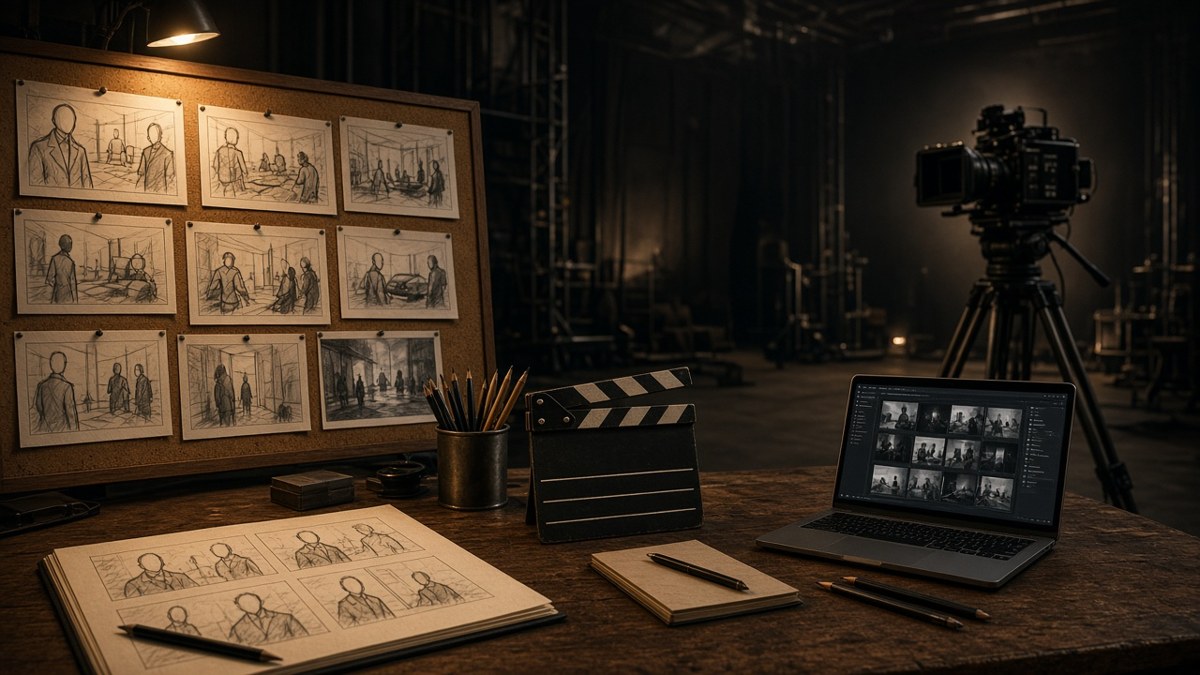
The best films are built long before a camera rolls. A director sketches the shot, a writer finds the emotional beat, a designer imagines the world. AI can speed up parts of that work: previsualisation, cleanup, background extension, rough animatics. Used that way, it gives small teams the power that only big studios once had.
The problem starts when the machine becomes the whole idea. A prompt that remixes existing footage, music and faces is not storytelling. Audiences may not care whether a shot came from VFX, CGI or AI, as our look at the biggest franchise box office battles shows, but they do care whether the story feels earned. Handmade work like the stop motion film in our Wildwood box office report still connects because people can feel the craft.
Copy and Paste Culture: The Higgsfield Debate
Higgsfield AI, a fast growing AI video startup, has become a lightning rod for this debate in 2026. Forbes reported that some clips in a Higgsfield media kit appeared to be stock video templates rather than AI output, according to videos and documents Forbes reviewed. The Register covered backlash after the company posted on X that its motion design tool had ended more than 20 creative jobs. Company representatives told Qazinform that the media kit materials were internal brainstorming files shared by mistake, acknowledged that some marketing had been too aggressive, and disputed other criticism.
Critics argue this is what happens when growth comes before craft. In our view, the lesson is bigger than one company: when marketing celebrates replacing artists instead of empowering them, the whole industry loses trust.
Why Storyboards and Original Content Need Copyright Protection
Storyboards are the blueprint of a film. They hold a director’s framing, pacing and visual language. Original drawings and scripts are already protected by copyright as human authored works, and that protection should be enforced firmly when AI systems imitate or reproduce them without permission.
The law is moving in that direction on authorship. The US Copyright Office said in Part 2 of its AI report, published on January 29, 2025, that purely AI generated material is not protected and that prompts alone are not enough, while human creative choices and modifications remain protectable. On March 18, 2025, the US Court of Appeals for the D.C. Circuit ruled in Thaler v. Perlmutter that the Copyright Act requires work to be authored in the first instance by a human being. Put simply, the human imagination is what the law values, and that is exactly what creators should defend.
Old Songs Over Creators’ Pictures Should Not Pass as Content
A growing wave of clips simply lays an old hit song over photos of artists and calls it new content. In our view, this should be banned by platforms. It adds no story, takes value from the songwriters and the people in the pictures, and floods feeds with noise. Music and images already carry copyright, and platforms should enforce it with the same energy they put into recommending the clips.
Stars’ Faces Belong to the Stars
No performer’s face or voice should be used without consent. This is the clearest line of all, and the rules are catching up:
- SAG-AFTRA: the union’s 2023 TV and theatrical contracts require informed consent and payment when a performer’s digital replica is used, as set out on the SAG-AFTRA AI resources page.
- US states: Tennessee’s ELVIS Act, signed in March 2024, added voice protection against AI misuse to the state’s personal rights law. In September 2024 California signed AB 2602 and AB 1836: the first requires contracts to spell out digital replica uses with the performer professionally represented, and the second requires estate consent for digital replicas of deceased performers.
- Federal bill: the NO FAKES Act of 2026 would create a federal right over digital replicas of voice and likeness. It cleared the Senate Judiciary Committee in June, but a September attempt to pass it by unanimous consent was blocked, so it is not yet law.
- European Union: under Article 50 of the EU AI Act, deployers must clearly disclose deepfakes, and these transparency duties have applied since 2 August 2026.
Consent, credit and payment should be the default everywhere, not only where a law forces it.
Our Take: Use AI With Direction, Story and Imagination
Hollywood should not fear AI. It should demand that AI be used properly. That means a human vision at the centre, original work protected, music and images licensed, and faces used only with permission. Tools that respect those rules will help filmmakers tell bigger stories. Tools that skip them will burn the trust of the very creators and audiences they need.
Technology can give us the next great film. But a tool cannot supply what a creator lacks. Without creativity, story, direction and imagination, AI does not hide a weak idea; it puts that emptiness on full display. With them, it becomes a brush in the hands of a real artist. Imagination is still what makes a film great.
FAQ
Can AI generated video be copyrighted?
According to the US Copyright Office, purely AI generated material is not protected by copyright, but human creative contributions such as original storyboards, scripts and meaningful edits can be.
Is it legal to use a celebrity’s face in AI content?
It depends on where you are. Many US states have right of publicity laws, Tennessee and California have specific AI likeness and digital replica rules, and the EU AI Act requires deepfakes to be labelled. Using a person’s likeness commercially without consent carries real legal risk.
What is the NO FAKES Act?
It is a proposed US federal law that would give people rights over AI digital replicas of their voice and likeness, with a notice and takedown process. As of November 2026 it has not passed the Senate.