
Opinion and analysis
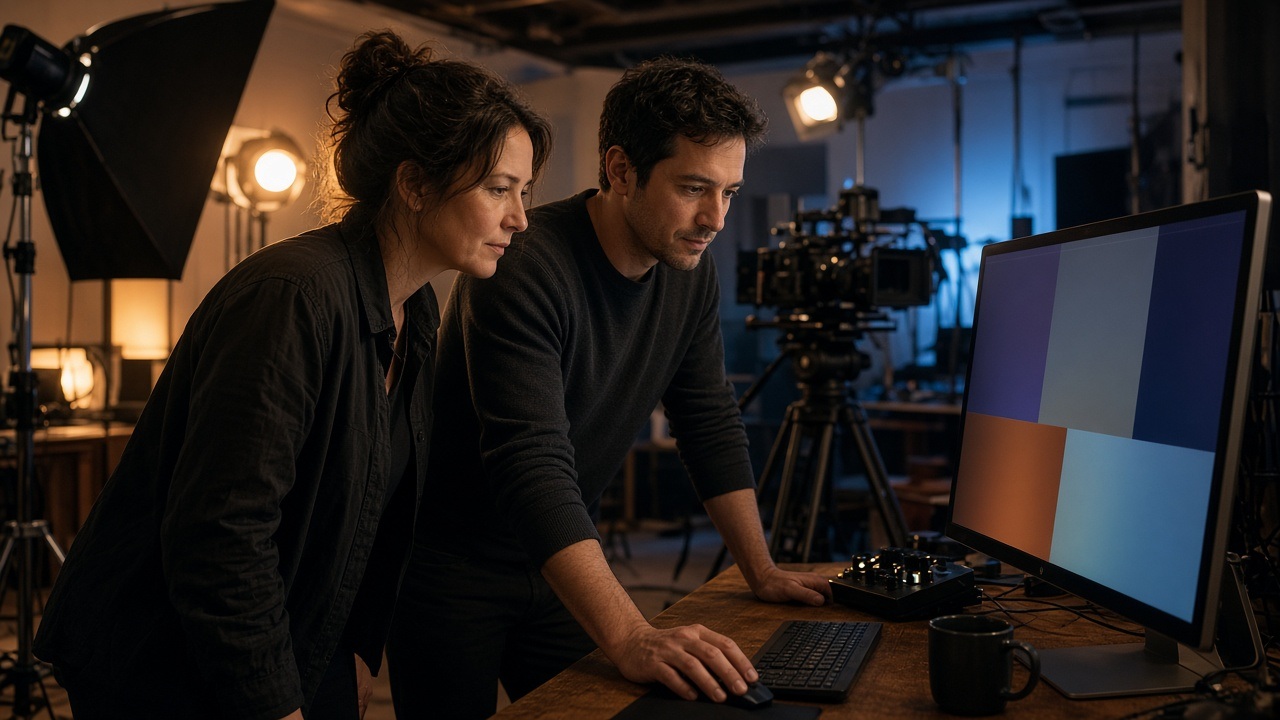
Imagine a director and an editor on a soundstage after midnight. A complicated sequence is not working. The director wants a different rhythm; the editor sees a simpler transition. An AI tool might help them explore alternatives before the crew returns. It cannot decide why the scene deserves to exist.
That imagined room captures Hollywood’s AI reckoning better than another prediction that the machines will replace everybody. The industry needs to reinvent how it develops, makes and sells films. But replacing creative judgment with cheaper output would confuse the factory with the product.
There is no need to pretend every studio chief is frightened. Some companies are already investing. The more interesting question is whether Hollywood will use the technology to make better decisions, or merely accelerate the bad ones.
Hollywood’s AI reckoning is already a business decision
In September 2024, Lionsgate and Runway announced a partnership to create and train a model customized on the studio’s proprietary catalog. On June 11, 2026, Runway announced an expansion: Lionsgate had taken an equity interest, and the companies planned a joint development program beginning with a short-form episodic series drawing on existing Lionsgate intellectual property.
Those announcements establish a commercial relationship and a stated creative direction. They do not establish that every production is cheaper, that audiences prefer AI-assisted movies, or that a studio has solved its profit problem. A partnership is evidence of investment, not a substitute for audited results.
This distinction matters because Hollywood loves a transformative pitch. A demonstration can make a difficult image look effortless. A finished feature must survive continuity, performance, revisions, contractual obligations and the unforgiving judgment of an audience.
Start with the friction, not the fantasy
The strongest initial case for AI is often less spectacular than the sales presentation. Previsualization can let filmmakers compare camera positions, environments and scene structures before committing expensive resources. Storyboards can become discussion tools rather than promises that every generated frame can be delivered on schedule.
In postproduction, carefully chosen tools could assist with repetitive cleanup, organizing material or exploring temporary alternatives. The right question is not whether software produced an impressive clip. It is whether the team delivered an approved shot with fewer total hours, acceptable quality and a defensible rights trail.
Localization offers another opportunity: reaching audiences whose languages a production could not previously support economically. But a translated sentence is not automatically a performance. Timing, cultural meaning, voice, lip movement and an actor’s consent all matter. Human translators, dubbing performers and supervisors should shape the result, not be treated as an inconvenience.
These are opportunities to test, not universal savings already proved. Studios should run bounded pilots with a conventional baseline and count revision costs, rejected outputs, security, licensing and final human review.
The bottleneck may be the screenplay
A cheaper cityscape cannot rescue a protagonist nobody cares about. A hundred alternate endings cannot tell a filmmaker which ending is emotionally honest. More options can even bury a production in decisions when nobody has authority to choose.
If AI shortens one stage, the recovered time should sometimes go into another script draft, a rehearsal or a conversation between departments. Spending every saved hour on additional output assumes that volume, rather than distinctiveness, is the missing ingredient.
Marketing has the same limitation. Our roundup of new movie trailers is a reminder that every title must communicate a reason to watch. Generating more promotional variations does not create that reason. A compelling promise still has to connect with a particular audience.
Consent and compensation belong in the budget
The labor framework has moved beyond the 2023 headlines. The Writers Guild of America’s guidance, updated October 30, 2026, says its 2026 agreement preserves earlier AI protections and adds written-notice requirements when companies license covered scripts or resulting productions to developers to train a commercial AI system, including information about remuneration for writers.
The core writing protections remain important: AI is not a writer under the agreement, companies cannot require writers to use it, and AI-generated material supplied to writers must be disclosed. Those rules are not a prohibition on imagination. They prevent a tool from becoming a device for stripping human authors of compensation and credit.
SAG-AFTRA’s 2026 television and theatrical agreement, ratified in June, also builds on digital-replica protections. Its official guidance says producers must bargain with the union before using synthetics and describes a principle strongly favoring human performances, with a significant-additional-value condition for relevant synthetic uses.
For producers, the practical lesson is straightforward: clear the intended use before production depends on it. A performer’s likeness is not simply another reusable texture. Consent, scope, payment, storage and future reuse need explicit attention under the applicable contracts and law.
Owning a library does not settle every right
A studio-controlled catalog can be a more responsible starting point than indiscriminate scraping. But ownership of a finished movie does not automatically answer every question about training, a performer’s identity, licensed music or contractual restrictions. Rights review must follow the actual assets and intended uses.
The U.S. Copyright Office’s January 2025 copyrightability report reinforces the commercial importance of human creativity. It concludes that AI assistance does not disqualify human-authored work from protection, while purely AI-generated expression lacks that protection. Prompts alone generally do not supply sufficient control under the technology the report assessed.
For a business built on valuable intellectual property, this is not administrative trivia. Studios should preserve records of human authorship, creative modifications and cleared inputs. The Office’s separate training analysis also should not be confused with a blanket judicial ruling approving every training practice.
Lower costs are not the same as a healthier business
Production efficiency addresses one part of the equation. Distribution access, release timing, marketing expense and audience attention remain constraints. Our Godzilla Minus Zero opening-weekend tracking coverage concerns the marketplace where those decisions meet paying customers, not a software demonstration.
Even genuine savings need not become profit. Competition can pressure prices, additional revisions can consume the gains, and marketing can absorb money saved elsewhere. Cheaper supply can also make attention harder to win.
Our weekend box-office results coverage offers another useful lens: films compete inside a release calendar and a wider entertainment economy. Reinvention must include how studios identify audiences, position releases and measure returns, not only how they manufacture images.
Do not automate away the next generation
There is a long-term danger in eliminating every junior task because software can assist with it. Assistants and emerging artists learn judgment through imperfect, repetitive work and proximity to experienced colleagues. Remove those pathways without replacing the training, and tomorrow’s department heads never acquire the experience today’s executives assume will always exist.
A serious transition should include paid training, supervised tool access and meaningful bargaining about changing jobs. Artists should help choose the workflows and share in productivity gains rather than carry all the disruption while the benefits travel upward.
Hollywood does not need a choice between technological paralysis and a creative surrender. It needs experiments with measurable outcomes, enforceable rights and people empowered to say that a technically impressive result is artistically wrong.
The future studio should be quicker at testing possibilities and more disciplined about choosing among them. The ambition is not a movie business without artists. It is a movie business that stops wasting their talent.



One thought on “Hollywood’s AI Reckoning: Reinvent the Business, Don’t Abandon the Artists”