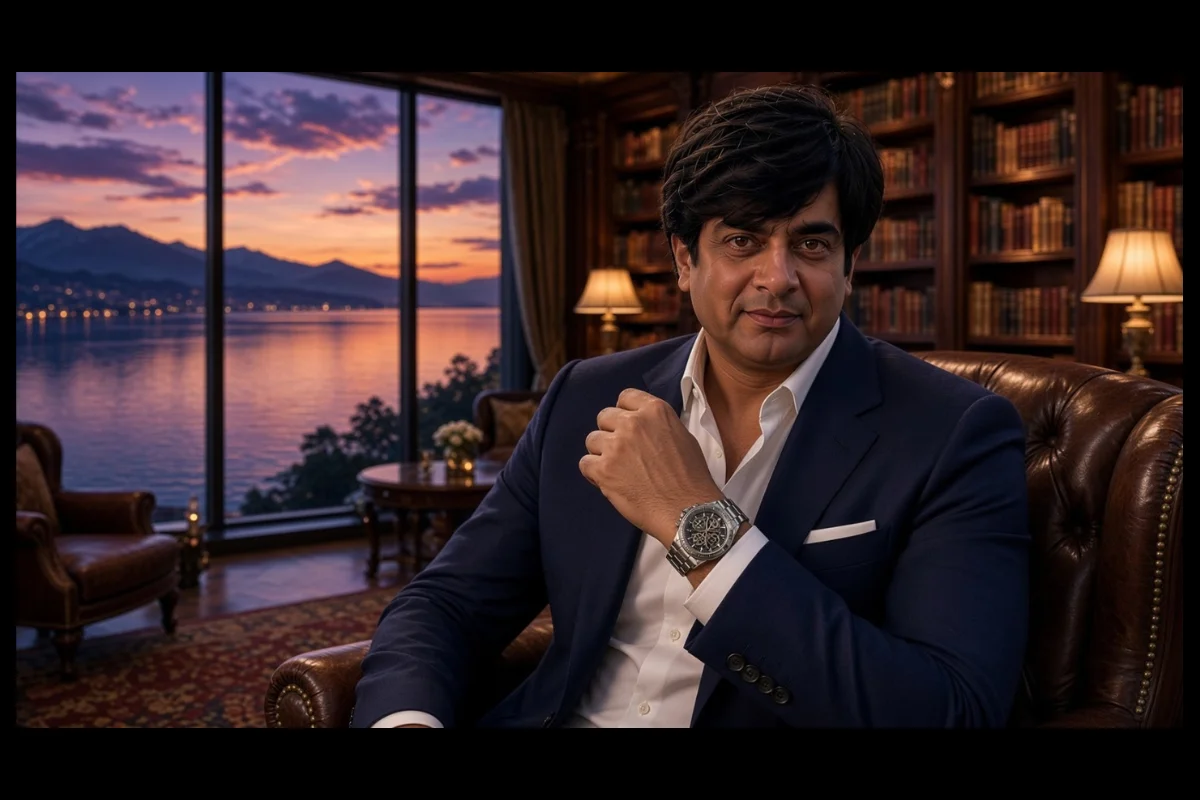
The Nvidia CEO admitted he was unfaithful. Reporting around Alice Huang has the shape of a spy-thriller script. Whether he is the Casanova type or a lame duck is a Hollywood question — not a new factual claim — and the investigations are still open.
Is Nvidia’s Jensen Huang the Casanova type — or a lame duck now that he has been caught out with Alice Huang? That is a Hollywood question, not a courtroom finding, and it should stay one. This town has always metabolised a Monday scandal into a Thursday pitch meeting. The Huang week already reads like a spy-thriller script: an admitted affair, an alleged intelligence operation that remains unproven in public, a board-hired law firm, a president on the record, and a CEO who still has the job. Whether that ending is “seducer walks” or “the studio has already moved on” is opinion. The facts are not.
The plot, as the record actually wrote it
On 8 November, Nvidia published Huang’s message to staff. “I was unfaithful to my wife. My actions hurt her and our children. There is no excuse for what I did. I am deeply sorry,” he wrote. He did not name the other person. The New York Times identified her as Alice Huang, also known as Huang Le, a Chinese businesswoman who is not related to him, and reported that US officials believe she was recruited by China’s Ministry of State Security. Reuters said it could not independently verify that intelligence allegation, and could not determine her whereabouts. The BBC reported that China’s foreign ministry said the claims were “intended to smear and malign China.” President Donald Trump said on 9 November that the FBI was looking into it, that Huang had told him he had “no idea she was a spy,” and that he believed him. The Associated Press has reported a Justice Department probe. Nvidia’s board has opened an independent investigation led by Joon Kim of Wachtell, Lipton, Rosen & Katz. Huang remains CEO. The company has said it has no reason to believe secrets or national security were compromised. The BBC reported that nearly $500 billion had been wiped off the company’s market value since Friday, and that House Foreign Affairs leaders have asked him to a closed-door briefing on 18 November; he had not yet said whether he would attend. Singapore’s Ministry of Home Affairs has said there were no investigations “in respect of Alice Huang” personally, even as police said probes into the Nvidia customer Megaspeed continue — a distinction this file will keep.
That is the treatment. It is already more structure than most original screenplays get in a first draft: admission, allegation, denial, investigation, a still-seated lead. Celebrityfees has the breaking file. MotivationsMasters asks whether she was a motivational force, or just bait. Global Celebrity Meter has the wider confidential-affairs and intelligence-leaks map. US Pulse News has placed the week in a five-year countdown of on-the-record cases. Limited Editions Europe asks why AI czars are falling for young women — or whether it is more.
Casanova, lame duck, or just a first act?
The Casanova reading is the one the tabloid muscle wants: a powerful man, a private intensity, a world-tilting consequence. It is a character type, not a diagnosis, and it is not a finding that he is still in control of the story. The lame-duck reading is the one a studio would fear: a founder whose personal life has become a national-security subplot, a share price already punished, a congressional briefing request on the calendar, and a board process he does not himself chair. Both readings can be argued from the same memo. Neither is a verdict. He is still CEO. The investigations are open. The affair is admitted. The spy allegation is reported, denied, and unproven in public. Until a prosecutor, a board or a court writes the third act, “Casanova” and “lame duck” are just two ways this town likes to pre-test an ending.
Honey-trap cinema has been teaching audiences this plot for decades. A public warning about tradecraft is not the same thing as a finding that this case is one. The distinction is the whole picture.
The genre, and the casting game
Hollywood already knows the honey-trap file as entertainment. From Hitchcock’s Notorious onwards, the romantic approach as an access strategy has been a standard genre machine — useful as a lens, fatal as a lazy accusation. Western security services have for years publicly warned that intelligence services use social and romantic approaches to get close to people with access. That warning is on the record as general tradecraft. It is not a finding against Alice Huang, and this page will not upgrade it into one. If a script supervisor marked the difference in the margin, they would be doing the only grown-up job in the room.
Then comes the part this town cannot help: who would play whom. This is not a package. Nobody has been attached. No studio has announced a film. It is the playful noise a scandal of this shape always attracts — the founder, the outsider, the memo, the boardroom, the Washington hallway. The internet will spend a week casting it anyway, the way it casts every other Monday. Our job is to keep that game labelled as a game. For the way tech money already elbows into this business, see our file on tech giants outbidding Hollywood’s creative polymaths and the AI reckoning inside the studios. For the quieter celebrity operating system, there are the secret rituals and the long public weather of a famous split that actually went to court. The Huang story is not a premiere. It is an open investigation with a very cinematic shape. Casanova or lame duck? Ask again when the credits are written. Not before.